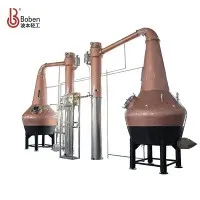
In the world of whisky, if the raw ingredients are its flesh and blood, then the still is the heart that shapes its soul. Its shape, size, and craftsmanship directly determine the fundamental character and flavor profile of a whisky. Understanding the still is a key step to unlocking the mysteries of whisky.
I. The Core Function of a Still
Distillation is a process that utilizes the fact that alcohol has a lower boiling point (≈78.3°C) than water (100°C). Through heating, vaporization, and condensation, the alcohol and flavor compounds in the wash are separated, purified, and concentrated. The mission of the still is not merely to extract alcohol but, more importantly, to selectively capture the desired "congeners" that contribute to wonderful flavors.
II. Main Types: Column Still vs. Pot Still
Whisky stills fall into two main categories, each corresponding to different production methods and styles.

1 Column Still
Characteristics:Features two tall columns filled with perforated plates (analyzer & rectifier). Also called a Coffey still after its inventor.
Process: Continuous distillation. Wash enters from the top while steam rises from the bottom, refining continuously through the plates.
Output: Highly efficient, producing neutral spirits up to 95% ABV. Light and pure, it lacks the robustness of pot-still spirits but is ideal for blends, bourbon, and grain whisky.
Key Control: The plate structure and temperature allow precise customization of the spirit's style and alcohol content.
Characteristics: The most traditional type of still, made of copper. Comprises a pot, swan neck, lyne arm, and condenser - resembling a large copper kettle.
Process: Uses batch distillation, typically in two rounds: first in the wash still (producing "low wines"), then in the spirit still (where the "heart cut" is made).
Output: Less efficient but retains more flavor compounds (esters, phenols). Yields a lower-ABV spirit with richer, more complex character. Essential for single malt whisky.
Key Details:
- Copper's role: Removes sulfides and impurities, smoothing the spirit.
- Shape matters: Short, wide necks yield heavier spirits; tall, narrow necks promote reflux for lighter, purer spirits. The lyne arm angle also influences flavor.

III. How Stills Shape Flavor
The still is far more than a simple heating vessel; every design detail is a "flavor master":
Size: Larger stills may produce less reflux, resulting in a more robust flavor.
Shape:
- Pot Belly: A wider belly increases the heating surface area, promoting the development of more flavors.
Swan Neck: Its height and angle determine the amount of reflux, directly affecting the body of the spirit.
- Lyne Arm: The angle of the lyne arm (whether upward, downward, or horizontal) filters different vapor molecules, influencing the final flavor.
- Copper Interaction: The age and thickness of the copper walls determine the extent and duration of copper contact with the vapor, which is crucial for removing sulfur notes. Many distilleries regularly hammer the interior walls of their stills to maintain optimal copper contact.

The Macallan:
Uses the smallest stills in Scotland, resulting in an exceptionally rich and full-bodied spirit.
Glenmorangie:
Boasts the tallest stills in Scotland, with swan necks reaching 5.15 meters, promoting significant reflux and producing an extremely pure and elegant spirit.


Springbank:
The only distillery that completes the entire process from malting to distillation and aging on-site. Its unique 2.5-time distillation process and still design are central to its complex flavor.
The whisky still is a perfect fusion of tradition, science, and artistry. It is far more than a cold metal apparatus-it embodies the very DNA of a distillery's flavour and serves as an extension of the distiller's vision. The next time you taste a whisky, take a moment to reflect on the beautiful copper instrument that shaped it, and sense within it the centuries of wisdom and masterful craftsmanship.