whiskey terminology
In the eyes of the British, whiskey is an alcoholic beverage comparable to "water of life". Of course, it is also one of the most popular spirits among men around the world. Whether you are a super fan of whiskey or a beginner, you will be exposed to some whiskey terms at one time or another. Today, Liquor Encyclopedia will explain whiskey terminology from A to Z. It is highly recommended to collect it!

Age (aging time): Since whiskey is mostly blended, its aging time usually refers to the time the youngest base liquor is aged in oak barrels.
Age Statement: Usually refers to a statement on the wine label about the aging time of whiskey. Like Age, the time marked on the wine label is usually the age of the youngest base liquor. It is worth mentioning that a bottle of 12-year-old whiskey will still read 12 years on the label four years after bottling, not 16 years. It is for this reason that some whiskey manufacturers will also indicate the distillation time and bottling time on the wine label.

American Oak (American Oak Barrel): Commonly made of white oak wood, it contains high levels of vanilla compounds and lactones, so it is widely used in the production process of whiskey.
Angel's Share: refers to the portion of the alcoholic liquid that naturally evaporates from aged whiskey. The name comes from the working people who are full of wisdom. They know that the evaporation of the wine is inevitable, but they don't want the fruits of their labor to be wasted, so they comfort themselves that this part of the wine is dedicated to the angels. In places like Scotland, whiskey loses about 2% of its alcohol per year on average; in some warmer regions, the rate is often higher. Especially in India, the proportion is even as high as 12%.
Blended Malt: Usually a blend of malts from different distilleries.
Blended Whiskey: The base liquor often comes from different years and distilleries, and the raw materials are generally a blend of grain whiskey and single malt whiskey. By law, single malt whiskey must contain at least 40% whiskey.
Bottled in bond: 1. Often refers to an excise tax; 2. A term for American whiskey that must be aged and bottled in compliance with the requirements of the Bonded Storage Act of 1897. Generally, whiskey must be brewed in the same year by the same still in the same distillery, then aged for at least 4 years in a government-supervised bonded warehouse, and then bottled under government supervision. The degree is generally 50%.
Bourbon: American classic whiskey, often distilled from more than 51% corn. After distillation, its alcohol content must not be higher than 80%, and then diluted with water to 62.5% before being placed in new charcoal-fired oak barrels. Medium aged.

Cask Strength: A common label term, sometimes abbreviated to C/S, which refers to whiskey bottled undiluted directly from oak barrels. As a result, this whiskey is bottled at a very high alcohol content and is generally more expensive.
Charring: refers to the roasting and firing of oak barrels, which is the most commonly used type of oak barrel in bourbon whiskey. The carbonation of the barrel will gradually take shape, while giving the wine a variety of complex flavors, such as sweetness and vanilla.
Chill-filtration: refers to placing whiskey at a low temperature of -10℃-4℃, and then passing it through a fine filter to remove residue and suspended solids. At this temperature, larger compounds including fatty acids, proteins, and esters cannot pass. However, controversially, some believe this can cause the whiskey to lose some of its body and flavor.
Chivas Regal: a well-known whiskey brand. It was the first whiskey producer in the world to produce and bring blended whiskey to the market, and was the creator of triple blends of whiskey. Among many Scotch whiskeys, Chivas Regal has long held a leading position in market share in Europe and the Asia-Pacific region.
Column still: The column still (left in the picture below) was invented in the 19th century. Its appearance greatly made up for the shortcomings of the pot still (pot still (right in the picture below), which will be introduced later). The distilled liquor that requires multiple distillations in a pot still can be obtained by one distillation in a tower still, and the tower still can achieve continuous production, which greatly improves production efficiency.

Distillation: Whiskey production is generally divided into 7 steps: malting, milling, fermentation, distillation, aging, blending and bottling. Among them, distillation is a crucial step and the most basic step. Typically, whiskey is distilled at a temperature of 78.29°C (below the boiling point of water), so during this stage the alcohol vaporizes but the water does not. When the vaporized alcohol enters the pipe and cools, it becomes liquid alcohol. At this time, the alcohol content of the whiskey is greatly increased.
Double Distillation: Since vaporized alcohol often contains a certain amount of impurities, whiskey distilleries often use processes such as double or even triple distillation to obtain liquor with high purity and few impurities. Most Scotch whiskey needs to be distilled twice, while Scotch lowland whiskey and Irish whiskey need to be distilled three times. Whiskey that is triple distilled has a smoother taste.
Grain Whiskey: Its raw material is grain, which is generally easier to brew and has higher yield, so it is a common base liquor in blended whiskey.
Highlands (Highland Whiskey): Many people who fall in love with whiskey started from liking whiskey from the Scottish Highlands. Drinking the whiskey there is like tasting French red wine, with strong regional characteristics. Among them, the texture is thick and the taste is sweet, with some peat and salt flavors, which are the typical characteristics of most Highland whiskeys.
Johnnie Walker: The world's most famous whiskey brand and the world's largest Scotch whiskey producer. For several years, it has been the world's largest and best-selling Scotch whiskey brand, and its global sales have far surpassed the second place and firmly ranked first.

Kentucky Bourbon: Bourbon can be produced anywhere in the United States, but only Kentucky producers can put the origin name on the label.
Lowlands : The Lowlands refers to the highland boundary fault in southeastern Scotland. The whiskey produced here is sweet and delicate, with a light spring water flavor, without losing the sense of layering. It is very suitable for those who pursue plain but not boring. Enjoy.
Micro distilleries : refers to new distilleries that operate on a small scale and have low expenses. They generally focus on quality rather than quantity.
Mizunara ( barrel): Japanese whiskey special barrel, made from oak onnara mainly found in the Hokkaido region of Japan. It is rich in vanilla compounds and has a very high moisture content.

Monkey Shoulder: A well-known whiskey brand, its packaging is very interesting - there are three naughty little monkeys climbing on the bottle neck. However, the brand name is not related to monkeys as popular speculation, but is inspired by the action of brewing workers turning malt on the floor.
Peated: Scotch whiskey is most famous for its unique peat flavor. In fact, this peat flavor comes from the whiskey brewing process. Usually, barley is heated and dried with peat after germination. This process will absorb a special "phenolic compound". The higher the content of this compound, the more obvious the peat smell will be.
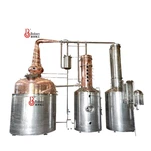
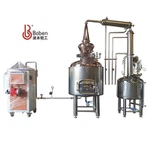
Pot Still: The pot still is the oldest and simplest distillation equipment. It mainly consists of three parts: a preheater, a still, and a snake condenser. The entire pot is generally made of copper. , usually more common in the production of single malt whiskey.
Rye: A whiskey grain ingredient that is very popular in the United States and often has a unique spice flavor. Before the Prohibition movement, most of the whiskey produced in the United States was rye whiskey.
Scotch: In English, Scotch whiskey is often abbreviated to Scotch. It refers to a whiskey produced entirely in Scotland, which must be aged in oak barrels for 3 years and bottled with an alcohol content of no less than 40%.
Scotch on the rocks: Refers to adding ice cubes to whiskey. It should be noted that although single malt whiskey can be drunk neat or with a small amount of water added, soda water or other substances, especially ice cubes, are generally not added.
Single Barrel : This kind of whiskey is mostly found in Scotch and Bourbon whiskey. It is generally the pride of the distillery. It usually means that the whiskey in the bottle comes entirely from the same aging barrel to emphasize its rarity and original flavor.
Single malt (single malt whiskey): one of the most characteristic whiskey varieties in Scotland. It is completely blended from single malt whiskey distilled in the same distillery. Its biggest feature is that it can reflect the origin and distillery to the greatest extent. feature.
Small Batch: The word "Small Batch" can often be seen on the labels of American bourbon and rye whiskey. This is not an official term, and there is no strict regulatory limit. It is added by the manufacturer himself. Go up sign. For example, the well-known brand Jim Beam has a Small Batch series of wines.
Sour Mash: A fermentation method commonly used in bourbon whiskey. It refers to adding the sour mash (Sour Mashing) leftover from the distillation of the previous batch of wine during fermentation. This not only saves costs, but also The raw materials can also be fermented smoothly, and the final base wine obtained is basically the same. It is worth mentioning that this method does not result in a sour taste in the final whiskey.
Straight Bourbon: A type of bourbon. Since bourbon itself has no aging requirements, it meets U.S. federal regulations and is aged in oak barrels for more than 2 years without any additives. When the color, aroma, and flavor of the liquor are altered, the whiskey is called straight bourbon.
SMWS (Scotch Malt Whiskey Society): The full name is The Scotch Malt Whiskey Society. All association members are from different countries, but most of the whiskey bottles they produce have similar designs, and the name of the distillery is generally not marked, but is replaced by a unique numerical code. . At present, the association has recruited many members from all over the world to build the world's largest Scotch whiskey consumer group.

Tennessee (Tennessee Whiskey): The brewing process of this whiskey is roughly the same as that of bourbon whiskey. The only difference is that the Tennessee whiskey must be filtered with maple charcoal before bottling. The filtered Tennessee whiskey tastes smoother and has a light flavor. Sweet and smoky. The world-famous whiskey brand-Jack Daniels is an important driving force behind the success of Tennessee whiskey.
Virgin Oak (new oak barrel): Originally means "virgin barrel", that is, an oak barrel that has never been used. Bourbon, for example, is aged exclusively in new, charcoal-toasted oak barrels. However, in the production of whiskey, many manufacturers still use sherry barrels, port barrels and even bourbon barrels for aging. Scotch whiskey is a typical example.
Whisk(e)y (whiskey): Is the English word for whiskey Whiskey or Whiskey? In fact, both are correct expressions, but the expressions in different countries are inconsistent. Among them, whiskey-producing countries such as Scotland, Japan and Canada are accustomed to label whiskey; while most producers in Ireland and the United States label whiskey. Of course, there are exceptions. For example, the American manufacturer Maker's Mark is accustomed to using whiskey.
Winter Wheat: refers to a type of wheat sown in autumn and harvested the following summer. This wheat has high starch content and low protein content.