Distillation is a unique fusion of thermodynamic precision and artisanal craft. Every premium spirit - whether smooth vodka, aromatic gin, layered whisky or barrel-aged brandy - derives its safety, consistent purity and distinctive flavor identity from a critical process known as fractional cutting. By separating raw distillate into three sequential fractions: heads, hearts, and tails, distillers remove harmful volatile impurities, preserve desirable aromatic congeners, and build the balanced, age-worthy foundation of high-quality spirits.
These three distinct distillation stages emerge naturally during production, separated by the unique boiling points and volatility of chemical compounds present in fermented wash and mash. Precise fractional distillate cutting is the core key to ensuring product safety, chemical purity of spirits and professional quality control, and it also marks the fundamental distinction between mass-produced industrial spirits and high-end craft spirits.

Heads, Hearts & Tails: Key Properties and Functional Differences
1. Heads (Fore-Shots): Volatile, Unsafe Initial Distillate
The heads are the first fraction to vaporize and condense during distillation, consisting of low-boiling, highly volatile compounds active at temperatures below 78.3°C. This early distillate contains concentrated toxic and undesirable compounds, including methanol, acetaldehyde, acetone and ethyl acetate. Easily recognizable by a sharp, solvent-like odor reminiscent of nail polish remover, heads carry significant health risks due to high methanol concentrations. To meet global food safety and quality standards, this fraction is strictly isolated and discarded, or repurposed exclusively for industrial solvent applications. It is never blended into consumer-ready spirits.
2. Hearts (Spirit Cut): The High-Purity Core Spirit Fraction
The hearts constitute the primary target of every distillation run, serving as the safe, drinkable core of all premium spirits. Vaporizing within a stable temperature range of 78.3°C to 82°C, this fraction is dominated by pure ethanol, complemented by balanced esters and phenols that define a spirit's signature aroma and flavor profile. Featuring a clean, subtly sweet ethanol aroma, the hearts deliver optimal purity and flavor balance. Distillers collect this fraction as the final base spirit, and the accuracy of its start and end cut points directly governs each batch's overall smoothness, clarity and quality consistency.
3. Tails (Feints): Heavy, Low-Volatility Final Distillate
Tails emerge in the late stage of distillation, as boiler temperatures rise and ethanol content gradually depletes. Distilling at temperatures above 82°C, this fraction is rich in heavy, low-volatility compounds: fusel oils (propanol, butanol, amyl alcohol), heavy fatty acids and residual water. Tails feature a heavy, oily texture paired with unpleasant bitter and earthy aromas. A high concentration of fusel oils also causes louching-a distinct cloudiness that compromises the spirit's visual clarity. Rather than discarding this fraction, professional distillers collect tails separately and reintroduce them into the next batch of un-distilled wash. This industry-standard tail recycling practice efficiently recovers residual ethanol and minimizes production waste.

How Professional Distillers Identify Precise Cut Points
Temperature readings provide a foundational reference, yet distillation phase transitions occur gradually rather than abruptly. Experienced craft distillers rely on a hybrid evaluation system, combining real-time technical data with refined sensory judgment to execute precise, repeatable cuts.
Real-Time ABV Monitoring: A parrot's beak fitted with a floating hydrometer is installed at the condenser outlet to track continuous alcohol proof. The hearts phase consistently holds a stable 70%–80% ABV. A rapid drop below 55%–60% ABV serves as a clear warning sign that tail fractions are approaching, requiring an immediate cut transition.
Sensory Evaluation (Smell & Palate): Sensory assessment remains an irreplaceable cornerstone of craft distillation. To test for lingering heads, distillers rub a small distillate sample between their palms; persistent solvent or chemical odors confirm the heads phase is still active. To detect incoming tails, practitioners dilute a sample to roughly 20% ABV. If the liquid turns cloudy and releases damp, earthy, or cardboard-like off-notes, fusel oil contamination is present, requiring an immediate end to heart collection.

How Distillation Equipment Shapes Cut Accuracy and Spirit Style
Still design and structural configuration directly determine cut sharpness, fraction separation and final flavor characteristics, creating two distinct production approaches for different spirit categories.
Traditional Pot Stills: Pot stills produce gradual, overlapping distillation phases with soft boundaries between heads, hearts, and tails. This natural overlap retains more flavorful congeners and subtle secondary compounds in the heart cut, yielding full-bodied, robust spirits built for long-term oak maturation. This timeless method defines heavy-style Scotch whisky and dark rum, where layered aromatic complexity far outweighs absolute chemical purity.
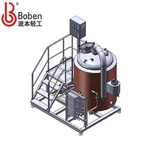
Modern Multi-Functional Column Stills: The equipment is equipped with a precision tray system and an overhead partial condenser, enabling accurate and flexible regulation of the reflux ratio. Operators fine-tune cooling water flow to regulate vapor velocity, forcing heavy fusel oils and unwanted impurities back into the boiler. This creates sharp, well-defined cut lines with minimal fraction crossover. Highly versatile, these systems support dual production profiles: low reflux settings preserve bold, rustic flavors for craft whisky, while full reflux mode produces ultra-pure neutral base spirits ideal for premium vodka and gin.

Why Craft Distillers Avoid 100% Pure Ethanol
A common misconception is that ultra-clean cuts equal superior spirits. In practice, master distillers intentionally reject absolute purity. Fully refined ethanol tastes flat, bland and one-dimensional. Instead, carefully controlled trace impurities create the layered, age-worthy complexity that defines world-class premium spirits. Strategically retaining micro-levels of late heads adds delicate floral brightness and aromatic lift, while subtle early-tail compounds contribute rich mouthfeel and nutty depth. While these trace congeners lend a slight harshness to newly distilled spirit, they drive transformative esterification during oak barrel aging. Over years of maturation, these compounds interact with oxygen and oak tannins, evolving into coveted notes of caramel, vanilla, green apple, and ripe stone fruit. Without these intentional minor impurities, aged brown spirits lack layered complexity and a lingering, refined finish.
Conclusion: Distillation Balances Hard Science and Artisan Craft
Premium spirit manufacturing excels through a balanced combination of scientific accuracy and artisanal intuition. Strict, consistent fractional cutting ensures food safety and batch-to-batch uniformity, while strategic retention of subtle congeners builds unique flavor profiles and brand-specific stylistic traits. With modern high-precision distillation equipment, distillers can fully customize every spirit style - from ultra-crisp neutral bases for vodka and gin to rich, complex oak-aged whiskies and brandies - elevating the standard of contemporary craft distillation.