The colorful fruits of winemaking: from honey plums to quinces
If there were a parade of brandy production, the highlights would be Hungarian szilvapálinka and Bulgarian szilvapálinka. If we want to explore the relationship between varieties and wine flavor, it is particularly worth noting apricots, honey plums, cherries and quince (also known as papaya).
Take honey plums as an example. Szatmári Szilvapálinka in Hungary uses varieties including penyigei, Besztercei and Nemtudom. The last variety name means (I don't know) in Hungarian. These honey plums are blue-skinned and yellow-fleshed varieties with slightly smaller fruit sizes, and the wine has a green flavor. Bekesi szilvpálinka uses a slightly larger variety with light red flesh, and the wine has a rounder and fuller taste without the green flavor. Other common varieties include presenta and Stanley. The former is smaller in size and produces a distinct floral aroma, while the latter is egg-shaped and larger in size. It usually produces honey-leaf barriques with a strong nutty and spicy aroma, or even a dark chocolate aroma. Different varieties can also be mixed, for example, Stanley and lepotica are suitable for making wine together.
(Prunus cerasus is a common fruit used in winemaking in Hungary. The Erös distillery uses different varieties of prunes to make wine and bottles them separately. Different varieties of prunes have different flavor potentials, and the differences can be seen from the size and appearance of the pits alone. Bolyhos, the industry's largest producer, can process 2,000 metric tons of various fruits a year, with the largest quantities being apricots, black sour cherries and prunes, as well as wimpers and grapes. The scale is so large that it even requires armed guards. The village where it is located is called Újszilvás, which literally means the new prune village. There are a total of 2,000 prune trees in the village, more than the number of villagers!)
Birspálinka can use different quince to make wine. Strictly speaking, the so-called different quince are not so much a matter of variety, but a matter of relatives. The Hungarian barlinka industry often distinguishes between (apple quince birsalma) and (pear quince birskörte): the former is round and flat in appearance, with an apple aroma; the latter is pear-shaped, with a pear aroma. The orchard grows quince, apples, and pears at the same time. During the flowering season, insects and wind naturally pollinate each other, and apple quince and pear quince are formed. Sometimes, one side and the other side of the same quince tree will produce quince of different shapes, each with a unique flavor for making wine, and can be specially marked on the product. Pear quince is rare, while apple quince and general quince are more common.
Different apple varieties mature at different paces and ripen at different times. The harvest season starts in late September and lasts until early December. An orchard can mix up to dozens of different varieties to disperse the labor intensity of the harvest season. When the harvest season is approaching, the first batch of apples that fall to the ground are called (pommes poubelles), which means (garbage apples), which means apples that cannot be used to make wine, but if you want, you can eat them.
The relationship between the harvest year and the quality of winemaking is not a single standard, but depends on the fruit and type of winemaking. For example, the 2018 vintage in Hungary was special. It was very dry from April to the harvest season, and the cold flowering period caused a 60% drop in apricot production. Although it did not affect the winemaking varieties, the cost of apricot winemaking soared due to the imbalance between supply and demand. Grapes are relatively drought-resistant, and the production in 2018 was relatively stable. In addition, the high sugar content and maturity can produce more concentrated and flavorful spirits for the grape distillation process. If a similar situation occurs in Cognac, France, it will inevitably be a very challenging and difficult year. Because Cognac brandy uses a distillation process, the wine to be distilled must have sufficient acidity to be naturally fresh. Dry and hot years will lead to a lack of acid, and early harvesting is imperative. However, drought may delay the ripening of grapes. If the ripening speed cannot keep up with the harvesting process, the total alcohol production will eventually decrease.
Brandy can be made by wine distillation, grape pomace distillation, fruit wine distillation, and direct fruit fermentation distillation, and the technical details are different.
Two major systems of distillation: batch and continuous
Strictly speaking, the distillation system includes heating, separation, cooling, and pipeline systems, but this is the view of equipment engineers. When we learn about wine tasting, we can understand it by classifying the distillation system into two major systems based on the distillation process: one is batch distillation, and the other is continuous distillation.
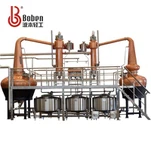
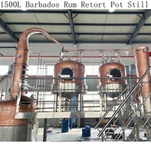
The so-called batch distillation is that the distillation raw materials put into each cup are discharged after the distillation is completed, and then refilled before entering the next round of distillation. If the final spirits are only distilled once, the process is called batch single-pass distillation; if the collected condensate is filled with re-distillation after the first distillation concentration, it is called batch two-pass distillation. Due to the development of equipment and technology, the batch distillation equipment of brandy can now be composed of different forms of distiller, including traditional pot stills and column stills, as well as many designs between the two.
Continuous distillation can continuously feed, distill, condense, and collect wine, and operate uninterruptedly. It is usually equipped with a large column distiller. The vapor and liquid repeat the process of evaporation and condensation between the layers inside the distillation column, rising layer by layer. At a certain calculated and appropriate height, the condensate is allowed to leave the distillation column, and then the spirit is obtained. The taller and larger the distillation column, the more layers there are, and the purer the flavor of the spirit is, and the higher the alcohol concentration can be. If a large continuous distillation equipment is used to produce brandy, the distillation concentration must be controlled, because if the concentration is too high, the flavor will be too pure. It does not conform to the traditional brandy flavor characteristics; relevant production regulations do not allow it.
Look at the type of brandy from the raw materials to be distilled
The raw materials to be put into the distiller are called raw materials to be distilled. They can be fruit wines such as wine or cider, or fermented alcoholic pomace, called (Full mash), which means (complete fruit crushed with wine and pomace). Or it can be a mixture of fruit wine and fruit crushed, or even wine pomace or grape pomace. Different raw materials to be distilled are enough to determine the basic form of brandy, including wine distillation, grape pomace distillation, grape fruit distillation, grape pomace distillation, non-grape fruit distillation, non-grape fruit distillation and other mixed distillation brandy.
Understand from the name of the condensate
The condensate obtained by distillation can be divided into three types:
Low-alcohol wine (Le brouillis): In a batch two-pass distillation system, the condensate extracted from the raw materials to be distilled that already contain alcohol has an alcohol concentration of only 10% at the lowest and 32% at the highest, depending on the setting of the distillation system. In the two-pass distillation process, this is not the required spirits, but needs to be distilled and concentrated again.
In the concentration process of the second distillation procedure, the condensate that cannot be used as a spirits product includes the head (les tetes), the heart (les secondes) and the tail (les queues). These condensates that cannot enter the final product have different destinations in different distillation systems. Sometimes they are discarded, and sometimes they are mixed with the next batch of low-alcohol wine or raw materials to be distilled for re-distillation.
The so-called (remove the head, remove the tail, and take the heart of the wine), in the two-step distillation process, only the heart of the wine (le coeur) is the section that is truly regarded as spirits, and it is also the prototype of spirits products. The concentration of the heart section varies. After being collected, it can be collectively referred to as new spirits. In the two-step distillation process, the alcohol concentration of the core spirits in the middle section of the second distillation is about 70%: if it is a single-step distillation or continuous distillation system, the target distillation concentration of new spirits is between 45-94.8%, which is a very wide range.
Figure 1 is a Balinka distiller that was used for 25 consecutive years in the mid-20th century and was eliminated. It can be seen that this distiller has a jacket design. When operating, the bottom is heated by direct fire, and water is filled between the jackets, just like heating the raw materials to be distilled in the pot with water. The distiller in Figure 2 is an antique from the Austro-Hungarian Empire in the first half of the 19th century. The manufacturer is located in Budapest, which can well reflect the phenomenon that the early distiller was generally small in size. Figure 3 is an early cider distiller.