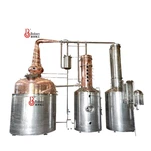
In whisky distillation, the copper still plays a crucial role. During the process, the copper reacts with sulfur compounds in the spirit, gradually wearing away. Additionally, to prevent burnt flavors from scorched residue, the still must be cleaned regularly-and each scrubbing removes a thin layer of copper. Over time, just like a well-used cast-iron pan, the still becomes thinner until it can no longer function efficiently and must be replaced. But how long does a copper still actually last?
Typically, a still lasts around 20 to 30 years, though some may need replacement after just 15 years, while exceptionally well-maintained ones can endure for over 50. Why such a big difference? Several key factors influence a still's lifespan:
Usage Frequency – The more a still is used, the faster the copper wears down.
Maintenance – Proper care, much like seasoning a good skillet, can significantly extend its life.
Heating Method – This might not be obvious, but it makes a huge difference. Traditional direct-fire heating (common in early whisky production) increases the risk of scorching, requiring more frequent cleaning and accelerating copper loss. Modern indirect heating (adopted widely since the 1960s) reduces this issue, helping stills last much longer.
This reminds me of an old family story: My parents had a cast-iron pan that lasted 20 years-until they switched from firewood to coal for cooking. Within two years, the pan burned through. The same principle applies to stills: Even small changes in heating methods can drastically affect longevity. Later, when I started cooking myself, I noticed that pots on induction stoves outlast those on gas burners. It just goes to show how much heating methods matter.
Before diving deep into whisky production, I assumed oak casks were the industry's biggest consumable-after all, wood seems less durable than metal. But the reality surprised me: A well-kept cask can easily last half a century, while a still might not. Of course, casks sit undisturbed in warehouses, while stills work hard every day. In the end, lifespan isn't just about material-it's about how it's used.