What is a pot still?
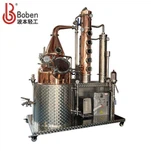
The pot still is a traditional distillation equipment and a classic among distillation equipment. It is mainly made of pure copper and is used to extract specific components from liquids or to make distilled liquor. The pot still is widely used in the production of spirits such as whiskey and brandy and the extraction of aromatic essential oils due to its simple structure, convenient operation and good distillation effect. The pot still can retain the flavor and complexity of the raw materials to the maximum extent and is deeply loved by craftsmen and industrial producers.

Pot Still Design
The pot still is mainly composed of the following parts:
Still pot: It is the main container for storing and heating the distillate. It has different shapes and sizes, which affect the taste and flavor of the whiskey.
Swan neck: The neck part extending upward from the pot, guiding the alcohol vapor to rise and condense, so that the vapor contacts the copper wall to produce reflux.
Condenser: It is divided into worm barrel type and shell and tube type. The worm barrel type is more traditional, with copper tubes wrapped around and immersed in the water tank; the shell and tube type consists of an outer shell and an internal copper tube, which is the method adopted by most distilleries today.
Spirits Safe: Used to analyze alcohol content and perform the "cutting the core of the spirits" operation.

How Does A Pot Still Work
First distillation:
Pour the beer mash into a pot still and heat it. As the temperature rises, alcohol and other volatile components evaporate before water to form steam. The steam rises to the neck of the still and then enters the condenser. After cooling, it condenses into liquid. This is the "rough wine". Usually, there are three parts: head, heart and tail. The head contains more harmful substances, and the tail contains more water and low-boiling substances. The head and tail need to be pinched off, and only the heart is retained as the raw material for the next distillation.
Second distillation:
Pour the heart of the spirit obtained from the first distillation into the still again for secondary distillation. This distillation will produce five parts: head, second head, heart, second tail and tail. Among them, the heart is the core component with the best taste and flavor, and the head and tail also contain components that are not conducive to the quality of the spirit and need to be separated out.
The influence of the shape and size of the distiller on the taste
The length, angle, and diameter of the neck tube design will affect the flow rate of the steam and the purity of the final liquid. A short and wide neck tube may retain more impurities, while a long and narrow neck tube helps improve the quality of the distillate.
The larger the distiller, the longer the distillation time is usually, and the temperature change is more moderate, which helps to separate more pure alcohol more thoroughly, and is usually used to produce light-bodied spirits. On the contrary, the smaller the distiller, the shorter the time, the more diverse the composition of the steam, and it is easy to retain more flavor substances, which is suitable for making complex and rich flavored spirits.
Pot still application scenarios
Spirits Distilling
Whiskey: It is a key equipment for traditional brewing such as Scotch Whisky and Irish Whisky. Pot still can retain the flavor of raw materials and the aroma produced by fermentation. For example, Scottish single malt whiskey can be distilled twice or three times to form a complex and rich flavor.
Brandy: It is used to distill wine to obtain brandy. Pot still can concentrate the aroma components in wine, making brandy have a strong fruity and floral aroma. Like cognac, during the pot still process, the liquor contacts the copper wall, which can remove some undesirable sulfides and improve the quality.
Traditional Herbal Wine and Liqueur Making
Gin: When making gin, the flavor of spices such as juniper can be incorporated into the wine through pot still. For example, London Dry Gin, the grain liquor is first distilled, and then spices are added and distilled again to give the spirits a unique plant aroma.
Liqueur: Pot stills are also used in the production of many traditional liqueurs. Raw materials such as herbs and fruits can be distilled together with the base spirits to give the liqueur a strong and pure flavor.
Conclusion
As an invention that spans history, the pot still is still of great significance in modern production. Choosing a high-quality pot still can significantly improve your work efficiency and product quality.
As a company specializing in distillation equipment, Boben Company is always committed to providing customers with high-quality pot stills and related distillation solutions. Whether you are a small-scale producer or a large industrial enterprise, our equipment can meet your needs. Contact Boben now and let Boben be your best partner!