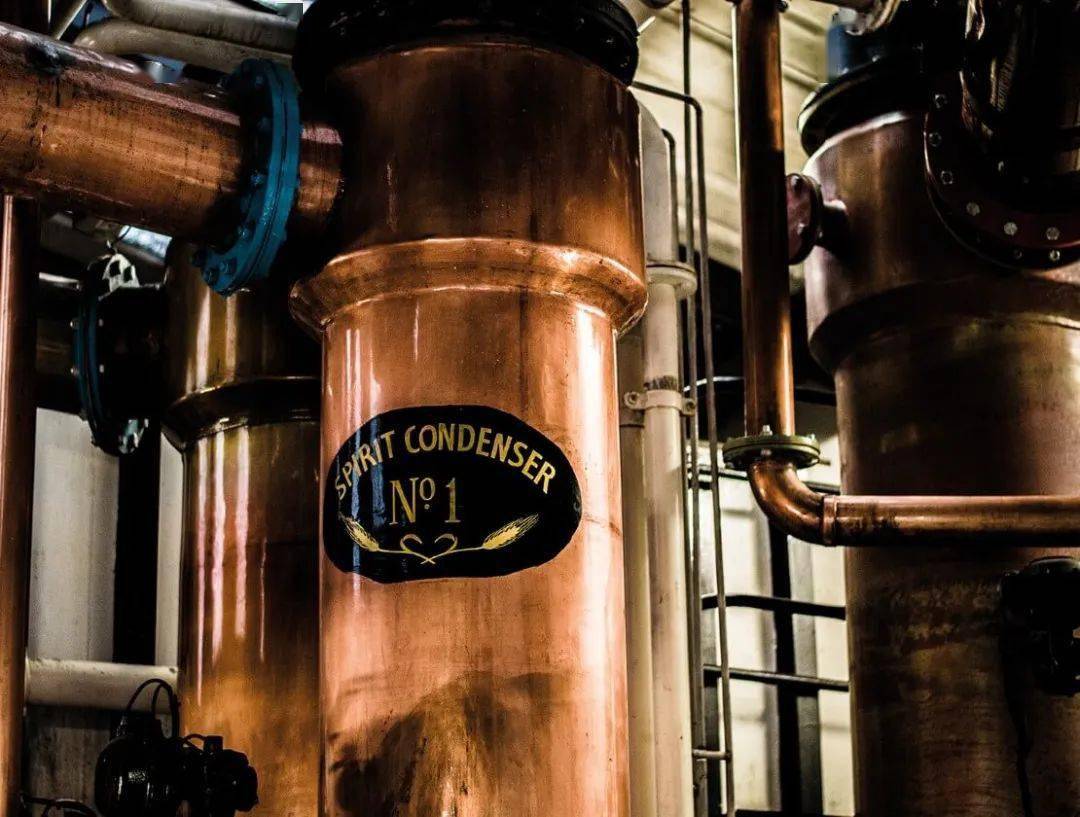
Whenever talking about the craft of whiskey, distillation always gets more attention.
The high temperature and boiling of the distiller give whisky a fiery vitality. In contrast, the condenser is like a silent worker behind the scenes. The close relationship between whisky craftsmanship and flavor has begun to prompt more and more enthusiasts to explore every detail in production. When the discussion about the worm barrel condenser is increasingly associated with the body and sulfur taste, the condenser is also pushed from behind the scenes to the front.
Before introducing the condenser we need to understand condensation.
Condensation can occur in two stages of whisky production. The first occurs after distillation, when alcohol vapor cools and condenses into liquid. The second is condensation filtration, but it is not what we are going to discuss today.
Let's take the double distillation commonly used in Scottish whisky distilleries as an example. After the first distillation, the liquid that passes through the condenser will return to the distiller for a second distillation and then pass through the condenser again. Although the two condensation processes are similar, there are subtle differences in their effects. According to Pierrick Guillaume, manager of the Kahlila Distillery, after the second distillation, the condenser becomes the "chef" that shapes the flavor. Turning alcohol vapor into liquid is not the only function of the condenser, but it also uses the cooling process to make the flavor more personalized. When the vapor condenses into liquid, there is energy conversion, and this is also when the alcohol and the condenser interact most actively.
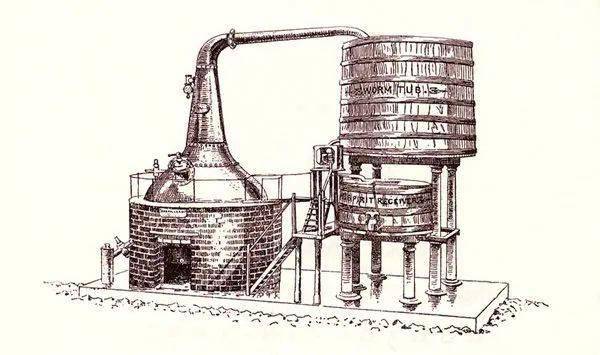
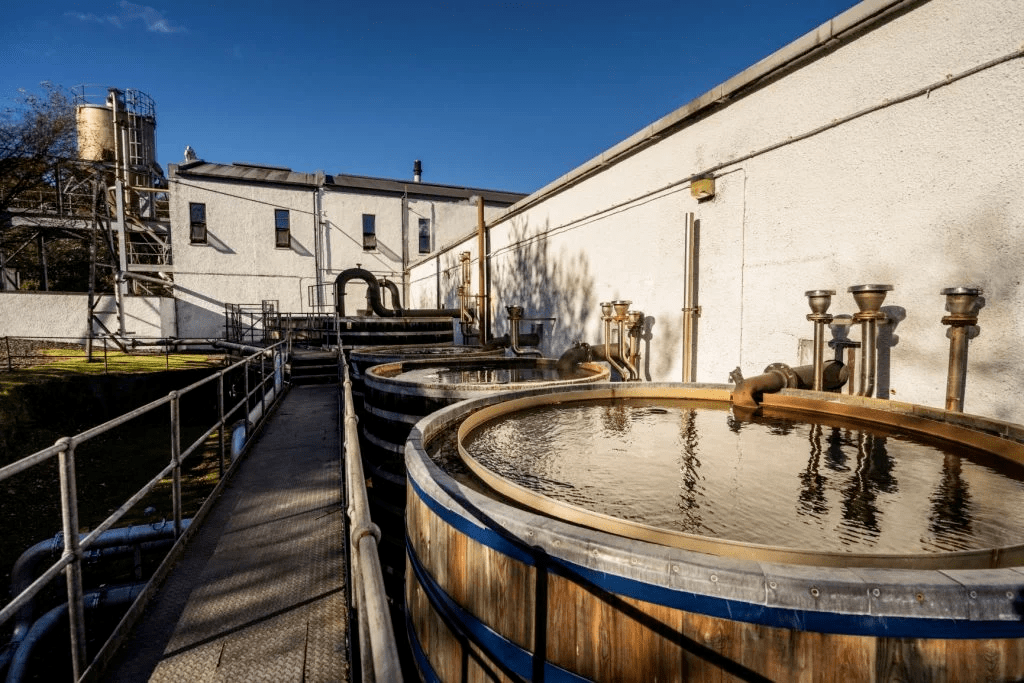
The condenser relies on its own material and shape structure to perform magic.
Most condensers are now made of copper because of its efficient thermal conductivity and excellent ductility. Copper can also remove sulfur compounds and help form ester compounds. Too much sulfide will mask some delicate flavors, such as fruity aromas. When the sulfide content is reduced, more subtle and delicate flavors in whiskey can be highlighted. Appropriate retention of sulfides can also increase the complexity of the flavor, but this requires the distillery to make a choice.
Worm condensers and shell and tube condensers: a dialogue between the old and the new
At present, most wineries use shell and tube condensers. Only a few wineries such as Talisker, Muhl, and Claygarch still insist on using worm barrel condensers.
Before the birth of shell and tube condensers, worm barrel condensers were the only choice for wineries. In the 1960s, worm barrel condensers began to be gradually replaced by shell and tube condensers. Between 1963 and 1972, most wineries chose to abandon worm barrels. The reason is of course very simple. Shell and tube condensers are more efficient and easier to maintain. In an era of increasing pursuit of stability, efficiency and profit, this choice is not difficult to understand.
Shell and tube condensers are actually equipment composed of an outer shell and internal copper tubes, all made of copper. The diameter of the outer shell is usually 0.5-1 meters and the length is 3 meters. The diameter of the internal copper tube is 25mm, and there are about 150-250 tubes.

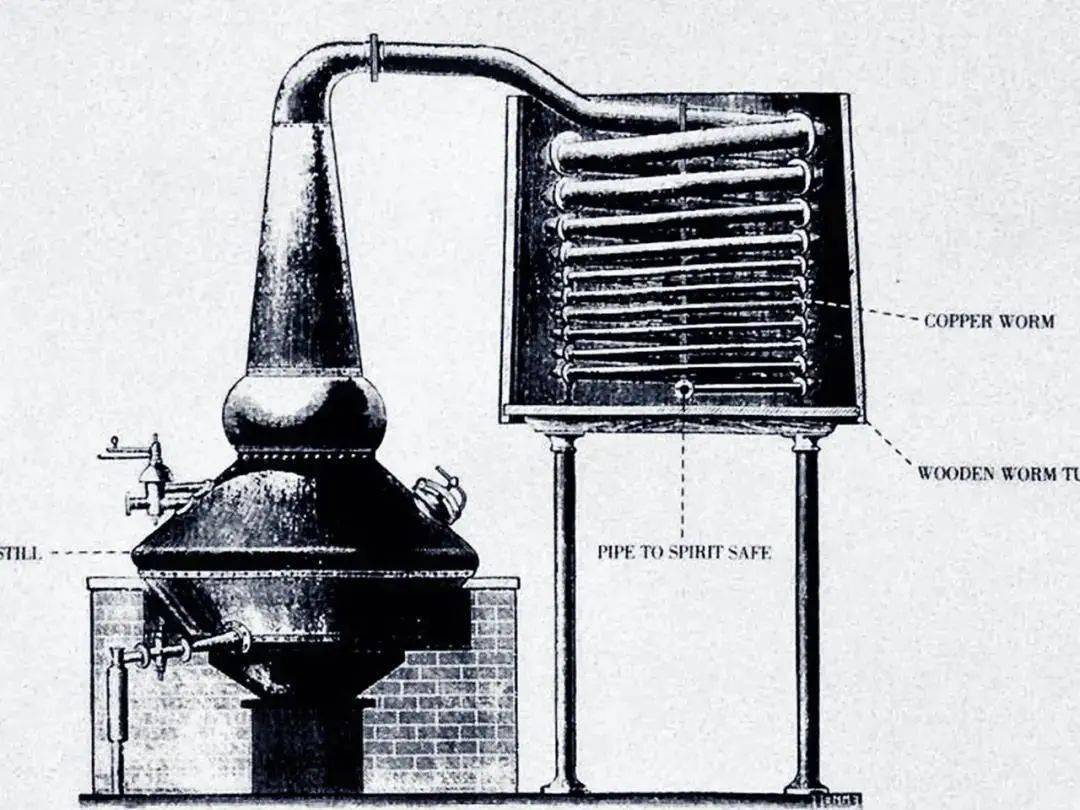
In terms of construction, there are significant differences between worm bucket and shell and tube condensers.
The worm condenser is often a long, winding copper tube, one end of which is connected to the lynn arm at the top of the still, and the entire tube is placed in a cold water pool. The cold water pool is usually placed outdoors, and when the alcohol vapor passes through the tube, it will condense back into liquid. Since a lot of cold water is needed for worm condensation, the condensation site is usually close to a water source. The name of the worm barrel comes from its shape, but the correct translation of worm should not be "worm". In Old English, worm means "snake" - the shape of the copper tube is indeed very similar.
The shell and tube condenser relies on large-area contact between the liquor vapor and densely packed tubes to achieve rapid cooling.
Thin copper tubes can react with more sulfides and off-flavors, and the resulting taste is cleaner. If there is a problem with a tube, workers can easily remove it for cleaning or replacement. But it is not so easy for the worm barrel condenser, whose pipes are thick at the inlet and thin at the outlet (the diameter is reduced from 400mm to 75mm). The reaction products of copper and alcohol vapor will slowly accumulate at the end of the pipe, and the narrower worm barrel pipe will undoubtedly become more difficult to clean and repair.
The maintenance cost of the worm barrel condenser is higher. Replacing one costs at least 100,000 pounds, while a new shell and tube condenser only costs 30,000 pounds. In addition, another troublesome thing about the worm barrel condenser is that it may leak wine. Because the worm barrel condenser is a lot of copper pipes connected together, there will inevitably be leaks at the interface. The staff needs to regularly monitor the alcohol content in the cooling water to avoid excessive loss of raw wine.
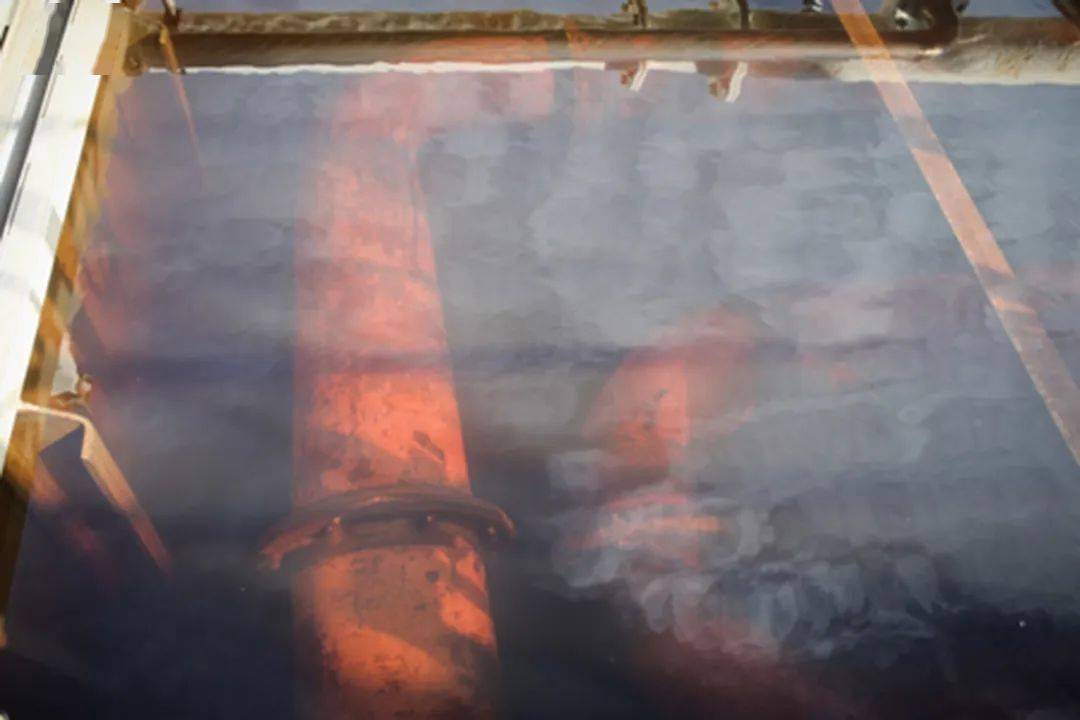
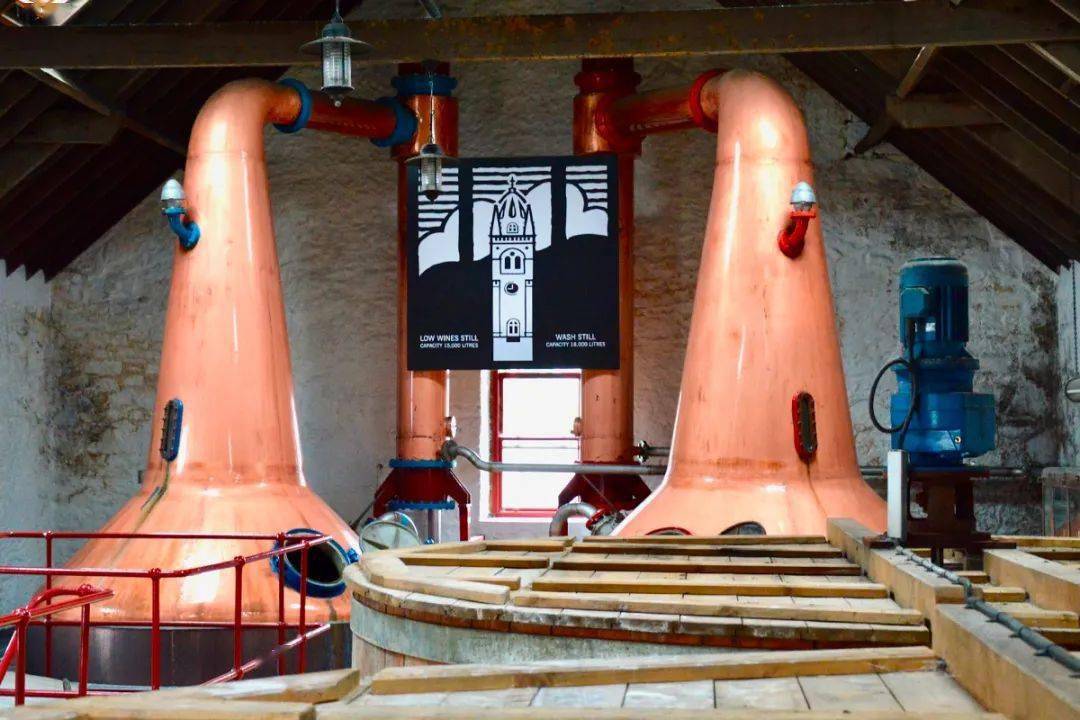
Although the worm condenser is troublesome and expensive, it really helps the flavor.
Many people describe the original liquor obtained by worm barrel condensation as having a strong oily feel, rich flavor, and a high content of sulfur compounds. This is because after the steam becomes liquid, it only contacts the bottom of the pipe, and the copper contact surface is much smaller than that of the shell and tube condenser, so more flavor substances (especially sulfides) can be retained. Bill Liang Sidun once estimated that the copper contact amount of shell and tube condensation is at least 20 times that of worm barrel condensation.
In addition, worm barrel condensation can be fine-tuned manually. We all know that if the condensation speed is faster, the original liquor will be in contact with copper for a shorter time, and the copper will have less dialogue, and the original liquor flavor will be stronger. If the temperature of the water used for worm barrel condensation is increased, the condensation speed will be lower, and more original liquor will be "retained" in the copper tube, and the original liquor will be lighter, and vice versa. Dalwhinnie once tried to use a shell and tube condenser instead of a worm barrel condenser, but found that the style of the original liquor changed significantly, so he finally gave up the idea. Oben also tried to use higher temperature condensing water to slow down the flow rate of the original liquor to obtain a lighter style of whiskey.
Although this article will focus more on the worm barrel condenser, it does not want to give you the impression that the worm barrel condenser is definitely better than the shell and tube condenser.
Understanding the condenser is to keep a normal mind and look at it. There is no superiority or inferiority between the two. Combined with the cost demands and style positioning of the winery, the worm barrel condenser and the shell and tube condenser have their own advantages. At present, the condensation process is getting more and more attention, which I think is necessary. After all, every time we understand the whiskey process a little better, we will be more amazed at the magic of whiskey.