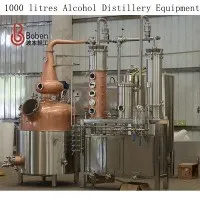
In the production of spirits, choosing between pot, hybrid, or column stills is by no means a matter of just looking at the equipment name. What truly determines the success of an investment comes down to three core questions: How much raw-material flavor do you want to retain? What is your target spirit strength? And what is your daily new-make output? Only by considering both product style and production targets can you make the right equipment choice.
Pot Still: The Artisanal Choice for Maximum Flavor
The pot still uses the classic batch production method, with each batch going through the full cycle of raw material processing, mashing and fermentation, distillation, spent wash discharge, and cleaning. Due to its lower degree of rectification, it retains the complex aromas and layered characters imparted by grains, fruits, and other raw materials to the greatest extent. Scottish regulations explicitly require that single malt whisky must be produced using pot stills – the highest recognition of its flavor-retention capability.


Pot stills are ideal for producing single malt whisky, brandy, traditional rum, and certain gins. They yield full-bodied, characterful spirits that cater to the premium market's appreciation for traditional craftsmanship. However, the drawbacks are equally evident: lengthy cleaning between batches, limited number of batches per day, and relatively high labor and energy costs. Therefore, they are better suited for small-to-medium-sized distilleries that emphasize heritage and have moderate output. If the goal is high-purity neutral alcohol or continuous capacity expansion, pot stills alone will be significantly limiting.
Column Still: The High-Efficiency, High-Purity Workhorse for Scale
Column stills use multiple trays or packing to establish continuous vapor-liquid exchange, with alcohol vapor condensing and re-evaporating repeatedly within the column to achieve high separation and purification. A true large-scale column system enables continuous feeding, continuous spent wash discharge, and continuous spirit take-off, drastically reducing inter-batch downtime. In the global distillation equipment market, column stills account for about 74.9% of the share – a clear indication of their dominance in large-scale production.
This type of equipment is widely used for vodka base spirits, neutral alcohol, light rums, and grain whisky. It delivers high product consistency, suitable for high-volume, stable supply. It should be noted that column stills are not limited to producing flavorless spirits; by adjusting the number of plates, take-off points, and operating parameters, some raw-material characteristics can be retained, though the overall spirit tends to be lighter. They demand high stability in fermentate supply, steam systems, cooling control, and automated monitoring, with a larger initial investment – making them suitable for distilleries pursuing high output and high purity at scale.


Hybrid Still: The Flexible All-Rounder
The hybrid still incorporates rectifying trays and demister devices above the pot, along with a bypass system. Operators can engage part or all of the trays, or bypass the rectifying section, enabling flexible switching between flavor retention and alcohol purity depending on product requirements. With fewer trays in use, it can produce richly flavored whisky, rum, and brandy; with more trays engaged, it yields cleaner, lighter spirits.
A single hybrid unit can produce a variety of spirits including whisky, gin, vodka, and rum – particularly suited for distilleries with a diverse product range but currently modest volumes per SKU. It reduces the capital pressure of purchasing multiple different stills and offers room for new product development trials. However, its valve, reflux, and cooling controls are far more complex than traditional pot stills, requiring higher staff training and automation system capabilities. If a distillery plans for multi-category, small-batch production, the hybrid often represents the most cost-effective choice.


Output Calculation: Volume Does Not Equal Actual Yield
A common pitfall in equipment selection is focusing solely on the wash-charge volume. Actual fill capacity, total batch cycle time (including heating, distillation, cuts, spent wash discharge, and cleaning), fermentable wash strength, and the cut points for foreshots/heads and tails all jointly determine the daily pure alcohol output. Before purchase, be sure to request from the manufacturer material balance data, energy consumption estimates, and a daily batch schedule based on your actual process – not just nominal capacity figures. Also evaluate future expansion potential, such as whether you can increase batches, add trays, or integrate with a continuous distillation system.
Final Selection Recommendations
If you produce only one or two styles of flavorful spirits, a pot still is the top choice.
If you need to develop multiple product categories on the same equipment, a hybrid is more economical.
If your goal is high-volume, high-purity base spirit in continuous production, the column still is the correct solution.
If your distillery requires both specialty flavorful spirits and neutral base spirit, consider a combination of a pot or hybrid still with a separate rectification column.
Before making a final decision, provide your supplier with detailed information on your spirit types, wash strength, target distillate strength, daily production targets, and expansion plans, and request references from similar cases. Only by combining flavor objectives with real output data can you select a distillation system that truly supports long-term development.