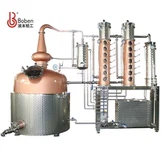
Key Components of a Mixing Tank
Tank Body
It is the main member, but it can be modified into different shapes. Sometimes it is simply a hollow cylinder which serves as the container for the ingredients.
Agitator
A Tangential blade or stir stick located within the unit assembly that rotates or mixes the mixture.
Motor
Motor is the most essential part because it is the one responsible for rotating the agitator rotating at a predetermined rotational speed.
Baffles
Extensions of a rod or plate in the tank used to improve mixing hotspots by changing the pattern of flow inside the tank.
Inlets/Outlets
Transfer lines used to dump the raw ingredients and transfer the substrate.
Factors to Consider When Buying a Mixing Tank
Tank Size and Volume
This is important in making sure that the tank that is being chosen is large enough to accommodate the desired amount of material without spilling any or not mixing the material effectively. Capacities vary from small lab types to large industrial types.
Materials and Durability
The tank must be constructed from stainless steel or plastic as appropriate according to the types of the mixtures that will be done in the tank. For example, there will be a need for a tank made from a very hard material for the corrosive chemicals.
Agitators and Blades
The mixing efficiency of the components is affected by the type of the agitator and how the blades are designed. High-shear blades are good for emulsifying, but for the more delicate blending contraction paddle blades are better suited.