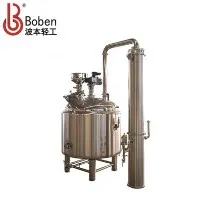
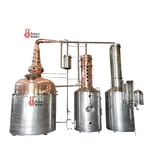
By utilizing the property that each component in the fermentation broth has different volatility, i.e. different vapor pressures of each component at the same temperature, the low boiling and high boiling substances in the liquid are separated, thus achieving the purpose of distillation.

The distillation column is mainly used for distillation, using differences in boiling points to separate substances. Distillation columns are mainly divided into plate columns and Packed columns. Plate column is relatively common, and its structure can be divided into three parts: plate, reboiler, and condenser.
Plate columns
Plate columns are divided into the following different types according to their structure:
Bubble cap tower
Sieve tray tower
Float valve tower
Tongue plate columns and floating tongue plate tower
Throughflow plate tower
How Plate Columns Work
Plate columns, also called tray columns, provide a series of contact stages between rising vapor and descending liquid. At each tray, vapor and liquid exchange components, helping separate the mixture according to differences in volatility.
The tray design affects how the column handles changes in vapor and liquid flow. Three common designs are bubble cap trays, sieve trays, and floating valve trays.
Bubble Cap vs. Sieve Tray vs. Valve Tray Columns
| Tray type | How it works | Main selection consideration |
|---|---|---|
| Bubble cap tray | Vapor passes through risers and beneath caps before entering the liquid on the tray. | Useful where liquid leakage through the vapor openings must be avoided and operation at low loads is important. |
| Sieve tray | Vapor flows through fixed holes in the tray deck. | A relatively simple, economical option when the operating load remains reasonably stable. |
| Floating valve tray | Movable valves rise or fall as vapor flow changes, adjusting the available opening area. | Useful when the column must operate across a wider range of production rates. |
Turndown describes how far a column can reduce its operating rate while maintaining acceptable performance. A tray suitable for steady, full-load production may not perform equally well during reduced-load operation. Tray selection should therefore consider both normal output and the lowest expected operating rate.
Packed columns
The packed tower body has no difference and is an upright cylinder. But it can be distinguished according to the different filling methods:
Bulk filler
Integral filling material (regular filling)

Random Packing and Structured Packing
The two packing arrangements listed above are commonly described as random packing and structured packing. Both provide surfaces over which liquid flows while vapor rises through the spaces between the packing elements.
Random packing consists of individual pieces loaded into the column to form a packed bed. Common examples include rings and saddles. Packing size and shape influence the available contact area, flow capacity, and pressure drop.
Structured packing consists of regularly arranged elements, often made from corrugated metal sheets or wire gauze. Its defined flow passages can provide efficient separation with a low pressure drop, making it useful when pressure loss is an important design constraint.
Why Liquid Distribution Matters
Packing alone does not determine column performance. A liquid distributor must spread liquid evenly across the packed bed so that vapor and liquid can contact effectively.
Uneven distribution can leave parts of the packing poorly wetted while other areas carry too much liquid. As a result, adding more packing height may not deliver the expected improvement in separation. Packing supports, distributors, and redistributors should be considered together with the packing itself.
Plate Columns vs. Packed Columns
The main difference between plate and packed distillation columns is how they bring vapor and liquid into contact. Plate columns use individual trays, while packed columns use a bed of packing material.
Neither type is automatically the best choice for every distillation process. The comparison should be made at the required separation duty, throughput, and operating pressure.