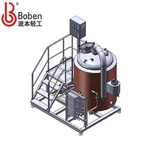
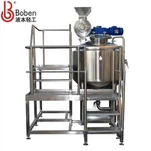
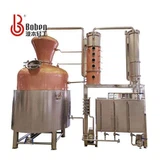
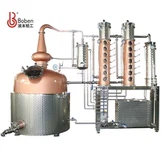
MASH TUN
Mash Tun is a brewhouse vessel used for mixing the ground malt with temperature-controlled water. This is called "mashing" and the porridge-like result is called the "mash." Mashing involves continuous stirring and certain temperature pauses which allows the enzymes in the malt (primarily, α-amylase and β-amylase) to break down the starch in the grain into sugars, typically maltose to create a malty liquid called wort.
Main Equipment (complement):
• Upper manhole customized
• Malt inlet up to flange
• Vapour outlet (chimney)
• Rotational cleaning device
• Heatexchanging jacket on cylindrical part
• Thermoprobe
• Heatexchanging jacket on bottom part
• Stirring device
• Total oulet
• Thermoinsulation with mineral wool
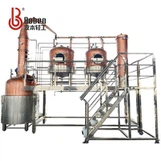
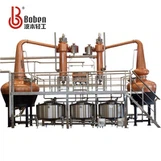
This multifunctional equipment of saccharification tank and stripping distillation distiller realizes multiple uses and saves procurement costs.


|
Product Name
|
800L Boben gelatinizting mash tun
|
|
Material
|
SUS304
|
|
Components
|
Stainless steel body, stainless steel condenser, Stirring system, cooling jacket
|
|
Pot Working Size
|
800L and can be customized for any sizes within container ship
|
|
Option
|
copper condenser
|
|
Heating
|
Electric/steam powered, steam can be electric or gas powered.
|


A brewer at Harveys Brewery in Sussex, England, takes a temperature reading in the mash tun. cath harries
The traditional mash tun is an enclosed circular vessel of varying diameter with a depth of about 2 m. They were constructed of steel or copper and were insulated on the vertical sides, which wereoften clad in wood. The floor of the mash tun has a series of removable plates which sit about 7 cm above the flat vessel floor. The plates have a series of slots approx 50 cm in length and 1 mm wide, which are about 10% of the vessel's floor area. At a predetermined time after mashing, wort is washed from the mash tun by sparging, a rinsing process where hot brewing water, at approximately 75°C, is sprayed over the mash and the dissolved wort is run off from the bottom of the vessel. See sparging. The single temperature infusion mash is quite different in texture than the more modern temperature- programmed mash, where the mash attains several temperatures before transfer to a lauter tun. In a mash tun, the mash needs to remain fluffy and somewhat stiff (rather than soupy), retaining some air as it gently floats on top of the wort running off underneath. This is a balancing act requiring some skill on the part of the brewer because if the mash comes to rest directly on the plates, it is likely to become compacted, stopping the flow of wort.
In traditional breweries, the process of mashing, wort runoff, and emptying the mash tun takes about 6 h; in modern breweries two vessels are used to produce wort, a mash mixing vessel and a lauter tun, reducing this time to about 3 h. Because it requires less floor space and one fewer vessel, many small breweries in the UK and brewpubs in the United States continue to use the mash tun and its attendant mashing technique.




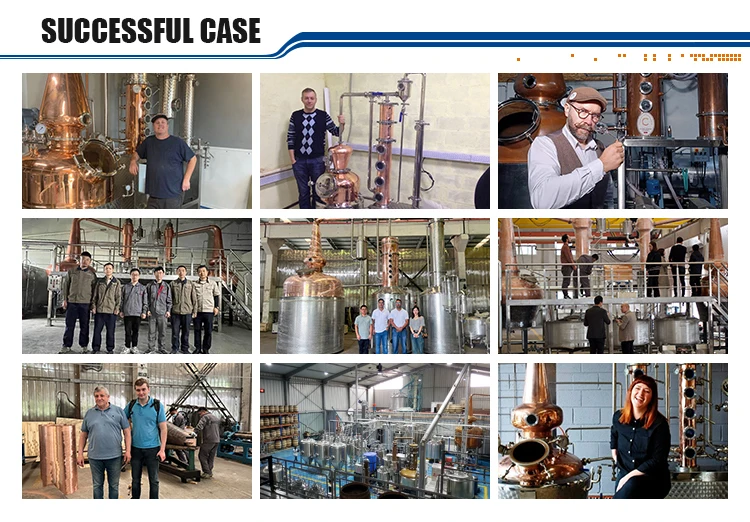


A:We hope to make business with companies from all over the world. And for now, our Distiller have been exported to especially in North America, South America, South Asia, Europe and Middle East.
Q:2. Can you print our Logo on the equipment?
A:Yes, we can totally produce products according to your this kind special request, even manufacture it based on your drawing.
Q:3. What is your lead time?
A:It's around 30 days normally. If we have the products in stock, it will be about 15days
Q:4. How can I check your factory situation while it's difficult for me to come to China?
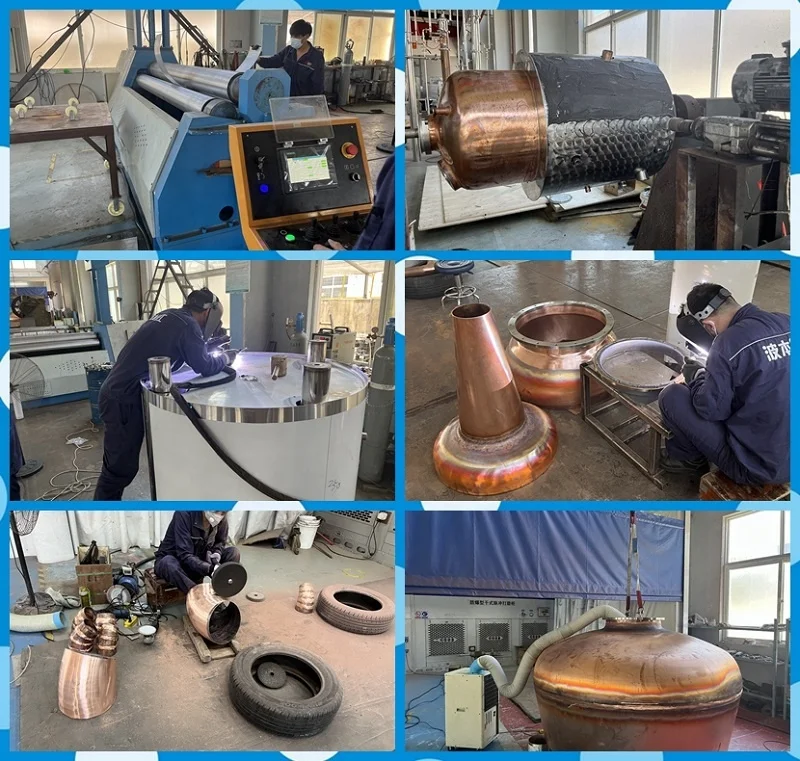
A:We have photos and videos on our website and facebook, It shows every step of the manufacturing.
Q:5. How long is the quality guarantee period?
A:We supply 12 months for quality guarantee according to customers' using frequency
Q:6.What is your payment term?
A:1. T/T transfer, 50% advance payment for start production, after paying 50% balance payment for shipping.
A:2. Paypal or trade assurance is available.